
Embodying research methodologies: Reflections on Kaupapa Māori Research Methods Workshop

Organised by the Macquarie University node’s Research and Ethics Training Program and facilitated by Māpuna Consultants in partnership with mana whenua, the wānanga brought together CEVAW researchers for an immersive learning experience
In November, Aryana Mohmood, Phd scholar from our Department of International Relations, had the privilege of attending a two-day Kaupapa Māori Research Methodologies Wānanga at Kānihi Māwhitiwhiti Pā in Hāwera, Taranaki, Aotearoa. This gathering formed part of the Research and Ethics Training Program delivered through the Macquarie University node of the Australian Research Council Centre of Excellence for the Elimination of Violence Against Women (CEVAW). The Australian National University is also a CEVAW node.
The Wānanga
It is one thing to attend a workshop on research methodologies; it is quite another to enter a wānanga, where those methodologies are lived, sung, and embodied in the daily lives and relationships of a community. Guided by mana whenua (customary authority) and local Māori academics, the knowledge-making process was grounded in Te Ao Māori and shaped by tikanga of togetherness, guardianship of the natural environment, and love and compassion (Te Pa Tu 2025). Throughout each stage of the wānanga, from the formal introductions and entry to the marae workshop discussions, the hikoi to Te Papakura O Taranaki, and the closing reflections, knowledge was continually linked to whānau and ancestors. Songs and storytelling filled the space, and the children present were both witnessing and active participating in various cultural practices. But this gathering comes at a critical social and political point for the country.
While some public service institutions show growing support for Te Ao Māori (Manatū Taonga 2023-4), there remain political and policy tensions under the current right-wing coalition government (Clark and Hill 2024). New policy decisions are reshaping the place of Māori culture in Aotearoa: children’s books containing Māori words are being withdrawn from circulation (Corlett 2025); legal requirements to teach local Māori culture have been scrapped (Corlett 2025); and laws once recognising Māori status in political and environmental decision-making have been reversed (Clark and Hill 2024).
Dr Acushla Dee Sciascia, who led this wānanga, expressed, “How do we look after ourselves in a space where people and digital media have become violent and destructive for Indigenous and Māori people here?” I reflect here on the ways her leadership created space for knowledge sharing but also embodied resistance to these moves of erasure.
“Walking the walk”: Aligning Theory with Practice
Indigenous research methodologies seamlessly integrate theory into practice. Through careful attention to cultural rules and protocols, each step of the process carried deep cultural meaning. These moments revealed Māori worldviews and knowledge-making processes that emphasise sensory experience, relationality, and decolonial approaches to learning. Dee explained, “What is really important for me is that I walk my talk, and I don’t just sit in theory and write about things but actually do the mahi.” Māori methodological approaches revealed how sensory immersion and physical engagement are central to the embodied and relational nature of Māori knowledge (Smith 2021; Greensill, Pihama et al. 2019; Mead 2013). The karanga, or ceremonial call of welcome, unfolded as a series of melodic exchanges between hosts and visitors.
Additionally, each moment was embedded in a network of relationships. During the karanga, all ancestors were acknowledged, and we were invited to also bring our ancestors into the Marae. This transition from everyday life into a space shaped by ancestral presence asked us to slow down, listen deeply, and enter with humility and good intention. It also affirmed the relational nature of knowledge making in Te Ao Maroi, where continual references to ancestors and past generations underscored how researchers’ work is part of an ongoing linage of knowledge. As Dee reflected,
“We are standing on the shoulders of our ancestors. They are the great giants of people who paved
the way for us, who created and preserved knowledge so that we could access it.”
This approach reflects the centrality of relationality and collective responsibility within Kaupapa Māori research. It foregrounds deep connections to community and ancestry as integral to how knowledge is formed, while equally recognising the interdependence of people and the natural environment. Before ascending Taranaki Maunga, Dee carefully briefed us on appropriate conduct, reminding us that the Maunga holds formal legal personhood and is no longer regarded as property but as an ancestor. This brings responsibility to protect the landscape, preserve its ecosystems, and uphold the ancestors’ authority.
As the group approached Taranaki Maunga, Dee led from the front, walking with her children offering karanga (calls), karakia or incantations and acknowledgements to their ancestor Taranaki. Karakia and waiata (song) are among many of the cultural knowledges and practices present throughout the wānanga.
By centering Indigenous peoples, histories, and lands, this mode of knowledge-making is inseparable from decolonial practice. In the final session of the wānanga, Dee’s mother, Whaea Christine, led us in a simple song about holding onto love. Its melody was gentle and unassuming, yet, as Dee later explained, its message was profoundly empowering, “We have it within our grasp, the tools and the things for us to make sense of the world.” Through this, it became clear that these methodologies are not abstract theories but living, relational practices sustained through embodied experiences. These approaches are also guided by strong and intergenerational leadership, particularly the leadership of women.
Women’s leadership embodied in the wānanga
Wāhine leadership was woven through every aspect of the wānanga – in the relational ways knowledge was generated, the sustained attention to cultural preservation, and the seamless bridging of spiritual and physical domains. It remained central to the epistemic and ethical life of the gathering. I came to understand women’s roles as layered and aligned with Māori conceptions of mana wāhine (women of strength), whakapapa (lineage or connection), and nurturing, principles that recognise women as carriers of cultural continuity and moral authority (New Zealand Government 2018; Pihama 2020). Dee described women’s leadership as grounded in an ethic of care and relational responsibility,
“With love for everybody who comes into their orbit, I think that is leadership. We don’t have to stand up at the front, but we have to know who we are. We have to care for everybody; we can’t leave anyone behind. We need to have a soft approach to moving intentionally forward into the future, whilst looking behind and learning from our predecessors.”
This understanding of leadership embodies collective advancement grounded in cultural realities and ancestral knowledge. As its purpose, wānanga, demonstrated that spaces of sharing knowledges including ancestral knowledges are a living site where all generations, including babies and children can learn and witness leadership in action, embodied by Dee and her whānau. Dee reflected with gratitude that her children were able to see their mother, grandmother, aunties, and uncles actively exercising leadership, modelling the values they hope children will carry forward. This intergenerational transmission of knowledge, care and responsibility lies at the heart of wāhine leadership.
Dee describes how her own lineage of strong women informs her approach to leadership and parenting, “My grandmother’s name was Rākei, my mum’s Māori name is Rākei, and this girl here is Hinerākei,” she said, pointing to her daughter on the trampoline. “It is no mistake we are raising strong women who won’t take any [nonsense] from anybody, but who will lead their people with humility, grace, and care for others.”
Through such reflections, the wānanga revealed how wāhine leadership is both inherited and enacted, drawing strength from whakapapa while continually shaping futures through acts of care, relationality and courage.
Constructing new futures, resisting cultural erasure
Kaupapa Māori research methodologies embody a generative and forward-looking approach, one building upon ancestral knowledge whilst creating a space for future generations. Kaupapa Māori research underscores Māori knowledges and knowledge production, reinforcing that all Indigenous peoples and cultures have always practiced rigorous and ethical research methodologies and practices. Under the leadership of wāhine during the wānanga, these methodologies also function as acts of resistance to mainstream research approaches that privilege individualism and abstraction, and to the current political climate which threatens Māori rights, language, and cultural authority and continuity. As learned in the Research and Ethics Training Program, Indigenous approaches differ fundamentally in their holistic, relational and community-centered orientation, refusing to seperate knowledge from lived experience, land and kinship.
This resistance is epistemological, offering different ways of knowing; but also ontological, affirming Indigenous ways of being, relating and doing in the world. As Dr Sciascia states,
“We have to completely debunk and refuse to buy into that narrative and remember that our knowledge matters. It matters because I say it matters, [because] I am telling my children it matters and because my ancestors said it matters. Also, this is the lens by which we see the world.”
To me, these acts of sustaining and transmitting cultural knowledge across generations, while affirming identity and worldview, are themselves powerful forms of resistance. As Dee reminds us, “They are important, they are critical to who we are, and they hold the answers to our global challenges.” This underscores that knowledge should not only be preserved but lived and enacted, and that resistance is expressed not just through opposition but active continuation of Indigenous thought, practice, and care for future generations.
The philosophies that underpin Indigenous research methodologies differ from conventional or mainstream approaches in several ways. Firstly, they affirm the inherent value and authority of Indigenous knowledge within research. As Dee asserts, “we don’t have to lean on Eurocentric frameworks to research,” but rather, “we have within our own arsenal, our own toolkit, narratives and histories to undertake meaningful and impactful research.” Secondly, Indigenous methodologies demand that research serve the best interests of the community, rather than functioning as an extractive or observational practice. Third, Kaupapa Māori approaches require deep reflexivity and sustained accountability, meaning researchers must continually evaluate the cultural and social impacts of their work. As Dee notes, this reflective process is essential not only for producing meaningful outcomes, but for “becoming the best researcher one can be.”
Concluding thoughts
The significance of this wānanga became increasingly evident as I reflected on the internal and external dynamics shaping not only our shared experiences over the two days but also the broader pressures confronting local communities and researchers working within these spaces. One profound lesson I drew is that methodologies are not confined to the academy, they are lived and breathed. They are embedded in daily practices, shaping our decision-making, forming collective identities and guiding the pathways through which knowledge, culture, and community continue to flourish.
This experience made me see how deeply connected we are as people, irrespective of culture, ethnicity, language or life experience. But also, how important Indigenous knowledge, language and traditions are and how they ought to be respected and maintained. In research and life, I take these lessons with me and feel grateful that I can continue learning more from Indigenous peoples across Australia and the Indo-Pacific.
My participation in the Kaupapa Māori Research Methodologies wānanga was made possible through funding support from the Centre of Excellence for the Elimination of Violence Against Women (CEVAW). The Australian National University is also a CEVAW node under the leadership of Professor Bina D’Costa, who supported my attendance as a PhD candidate. This gathering formed part of the Research and Ethics Training Program, which provides a comprehensive framework to ensure that inclusive, context-sensitive, and ethically rigorous methodologies are embedded across all CEVAW research activities. It trains chief investigators, postdoctoral fellows, and graduate research students in Indigenous-centred research methodologies and ethics. Drawing on the expertise of Partner Investigators from across Australia and the Indo-Pacific, including Aotearoa (New Zealand), the program strengthens cross-regional and interdisciplinary learning. Guided by CEVAW’s core values of Indigenous Leadership and Governance, Relationships First, Material Equity, and Community Benefit, it ensures these principles are integrated across every research pillar and workstream.
References
Deena C (1 November 2025) ‘First hui of board representing interests of mountain’s legal personhood held’, The Post | Te Upoko O Te Ika, accessed 3 December 2025.
Emily C and Rebecca H (19 September 2025) ‘New Zealand is unwinding ‘race-based policies’ Māori say it’s taking away their rights’, ABC News, accessed 2 January 2025.
Eva C (20 August 2025) ‘Why is the New Zealand government cutting Māori words from some school books?’, The Guardian, accessed 3 December 2025.
Linda Tuhiwai S (2021) Decolonizing Methodologies Research and Indigenous Peoples, 2nd edn, Bloomsbury Academic, India.
Manatū Taonga (Ministry for Culture and Heritage) (2023 4) Annual Report 2023–24/ Te Pūrongo ā-Tau Manatū Taonga, Ministry for Culture and Heritage, New Zealand Government, accessed 3 December 2025, https://www.mch.govt.nz/publications/annual-report-2023-24
Mead, H. M. (Aotearoa, Māori). (2013). Tikanga Maori: Living by Maori Values. Huia Publishers.
New Zealand Government (27 September 2018) A legacy of Mana Wahine – Women’s Leadership [speech], New Zealand Government, accessed 2 December 2025, https://www.beehive.govt.nz/speech/legacy-mana-wahine-%E2%80%93-womens-leadership
Pihama L (2020) ‘Mana Wahine: Decolonising Gender in Aotearoa’, Australian Feminist Studies, 35(106): 351-365, https://doi-org.virtual.anu.edu.au/10.1080/08164649.2020.1902270 Pihama, L., Greensill, H., Manuirirangi H and Simmonds, N. (Aotearoa, Māori). (2019). He Kare-ā-roto, A Selection of Whakataukī Related to Māori Emotions. Te Kotahi Research Institute.
Te Pa Tu. (Aotearoa). (2025). 3 Māori Concepts That Will Change The Way You See The World – Te Pa Tu. https://te-pa-tu.com/our-stories/3-maori-concepts-that-will-change-the-way-you-see-the-world/
Indigenous authored sources have been cited according to Indigenous Knowledges Attribution Toolkit (IKAT) structure.

Participants engaging in hands-on group discussions on the relevance of Kaupapa Indigenous Research Methodologies within diverse research areas.
Participants engaging in hands-on group discussions on the relevance of Kaupapa Indigenous Research Methodologies within diverse research areas.
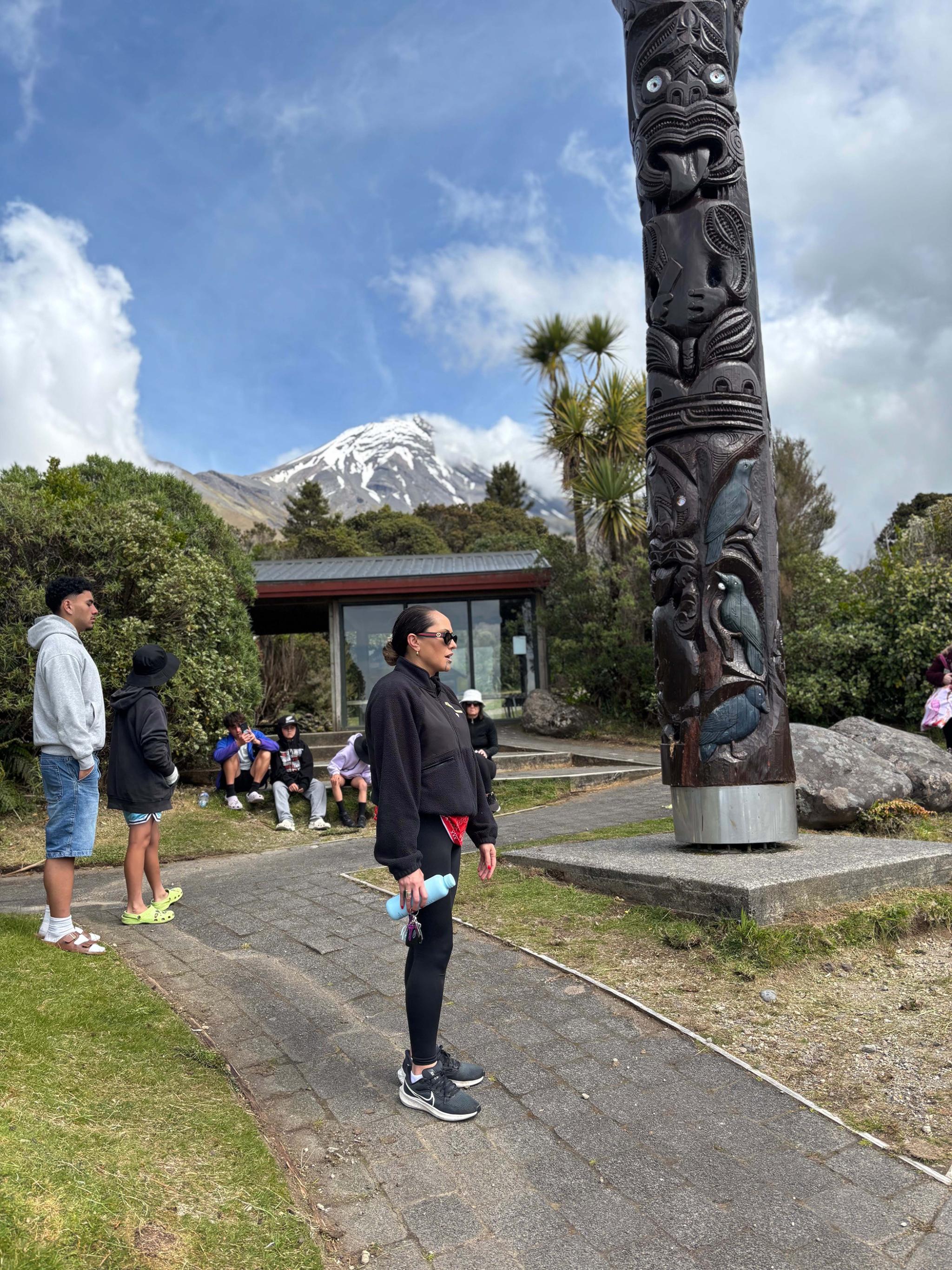
Dr Acushla Dee Sciascia, Maori researcher providing a briefing to the group before the hikoi (trip) up the mountain.
Dr Acushla Dee Sciascia, Maori researcher providing a briefing to the group before the hikoi (trip) up the mountain.
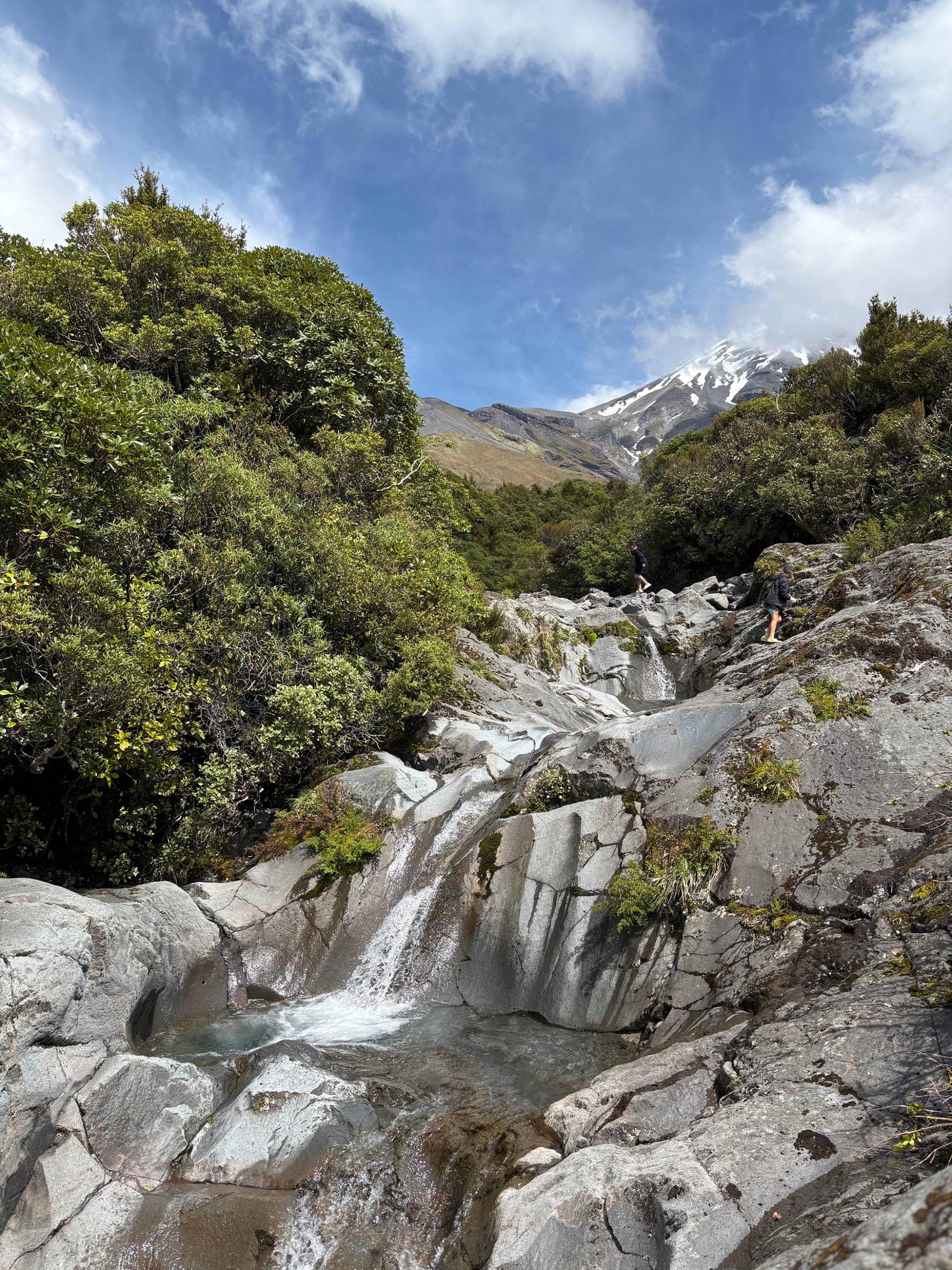
Te Papakura O Taranaki, New Zealand.
Te Papakura O Taranaki, New Zealand.

Dee’s mother, Whaea Christine playing a song to all participants during the wānanga.
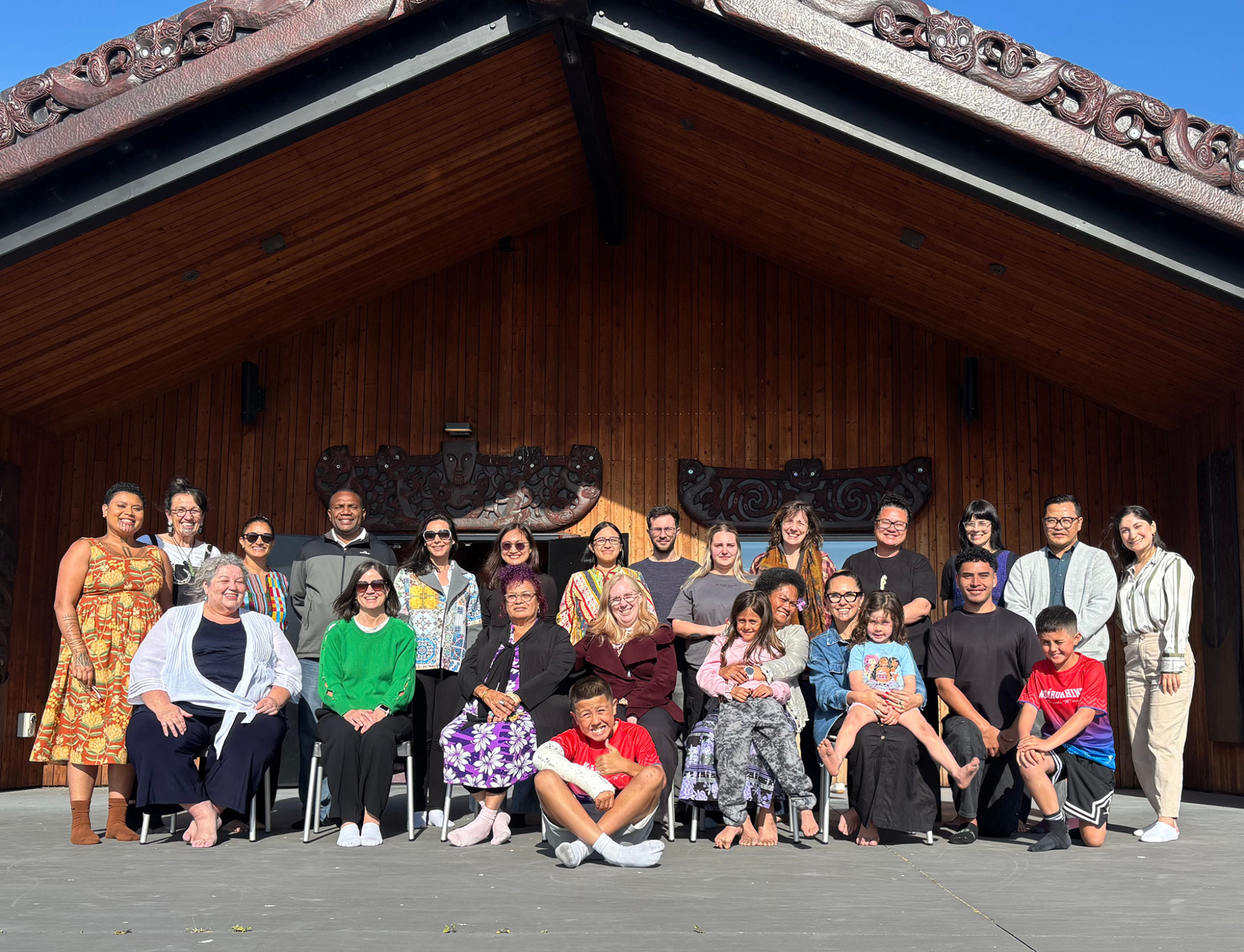
Organised by the Macquarie University node’s Research and Ethics Training Program and facilitated by Māpuna Consultants in partnership with mana whenua, the wānanga brought together CEVAW researchers for an immersive learning experience
Organised by the Macquarie University node’s Research and Ethics Training Program and facilitated by Māpuna Consultants in partnership with mana whenua, the wānanga brought together CEVAW researchers for an immersive learning experience grounded in Māori worldviews.